How to Hang Art in Rentals: A Renter's Guide
Table of Contents
Last Updated: October 7, 2026
Check Your Lease and Get Permission Before Hanging Art
Before you hang art in rentals, read your lease carefully. Most landlords have rules about what you can and cannot do to the walls.
The best approach is to ask permission in writing.
Many rental agreements include specific clauses about wall damage. Your lease might say you need to restore walls to their original condition before leaving.
If your lease is unclear, contact your landlord directly. A quick conversation can prevent problems. Most landlords appreciate tenants who ask first rather than apologize later.
How to Hang Art Without Drilling: Damage-Free Methods
Hanging art in a rental doesn't require nails or holes. Several damage-free methods work well for most walls and artwork. These approaches let you decorate without risking your security deposit.

Removable Adhesive Strips and Hooks
Removable adhesive strips are the safest choice for renters. These strips stick to your wall and to the back of your frame.
Quality matters here. Heavy-duty adhesive strips hold more weight than basic ones. Check the weight limit on the package before buying. A standard strip typically holds 5-10 pounds, while heavy-duty versions support 16-25 pounds.
Here's how to use them:
Clean the wall with a dry cloth to remove dust
Apply strips to the back corners of your frame
Press firmly for 30 seconds on each strip
Wait 24 hours before hanging anything on the frame
When removing, pull the strip slowly at a 45-degree angle
Removable hooks work similarly. They stick to the wall and hold a picture frame or wire. The advantage is you can reposition them easily if your layout changes.
Leaning Artwork Against Furniture
The simplest method requires no wall attachment at all. Lean your artwork against furniture like a sofa, console table, or bookshelf. This works beautifully for medium and large pieces.
Leaning art creates a casual, gallery-like look. It's also flexible. You can change your layout whenever you want without any effort. This approach suits renters who move frequently or like to redecorate often.
The downside is stability. Make sure your furniture is sturdy and won't tip. Keep artwork away from high-traffic areas where people might bump it. Leaning works best in corners or against walls where the piece won't get knocked over.
Wall Rails and Picture Rails
Picture rails are thin horizontal bars mounted near the top of your wall. They hold hooks that suspend artwork with wire or chains.
Many landlords allow picture rails because they're removable. You mount them with adhesive strips or lightweight fasteners. When you move, you take the rail with you and patch any small holes with spackle.
Picture rails work well for gallery walls. You can hang multiple pieces at different heights. Rearranging is easy. Just move the hooks along the rail.
Weight limits vary by rail type. Most support 20-50 pounds per hook. Check the specifications before hanging heavy pieces.
Assess Your Wall Surface Before Hanging
Not all walls are the same. Your wall type determines which hanging method works best. Understanding your wall surface prevents damage and ensures your art stays secure.
Drew & Jonathan
Checking Paint Condition and Wall Type
Run your hand over the wall. Smooth walls hold adhesive strips better than textured ones.
Check for damage or soft spots. Press gently on the wall. If it feels spongy or gives way, the wall may have moisture problems. Avoid hanging heavy artwork in these areas.
Paint condition matters too. Old, peeling, or flaking paint won't hold adhesive strips securely. Clean the wall first and let it dry completely. Dust and loose paint reduce adhesion.
If your walls are textured, use heavy-duty adhesive strips rated for textured surfaces. Standard strips won't work.
Weight Limits by Hanging Method
Different methods support different weights. Knowing these limits prevents your artwork from falling.
Hanging Method | Weight Capacity | Best For |
Standard adhesive strips | 5-10 pounds | Small frames, prints |
Heavy-duty adhesive strips | 16-25 pounds | Medium frames, canvas |
Removable hooks | 8-15 pounds | Light to medium artwork |
Picture rails with hooks | 20-50 pounds | Large pieces, gallery walls |
Leaning against furniture | Unlimited | Any size, no wall stress |
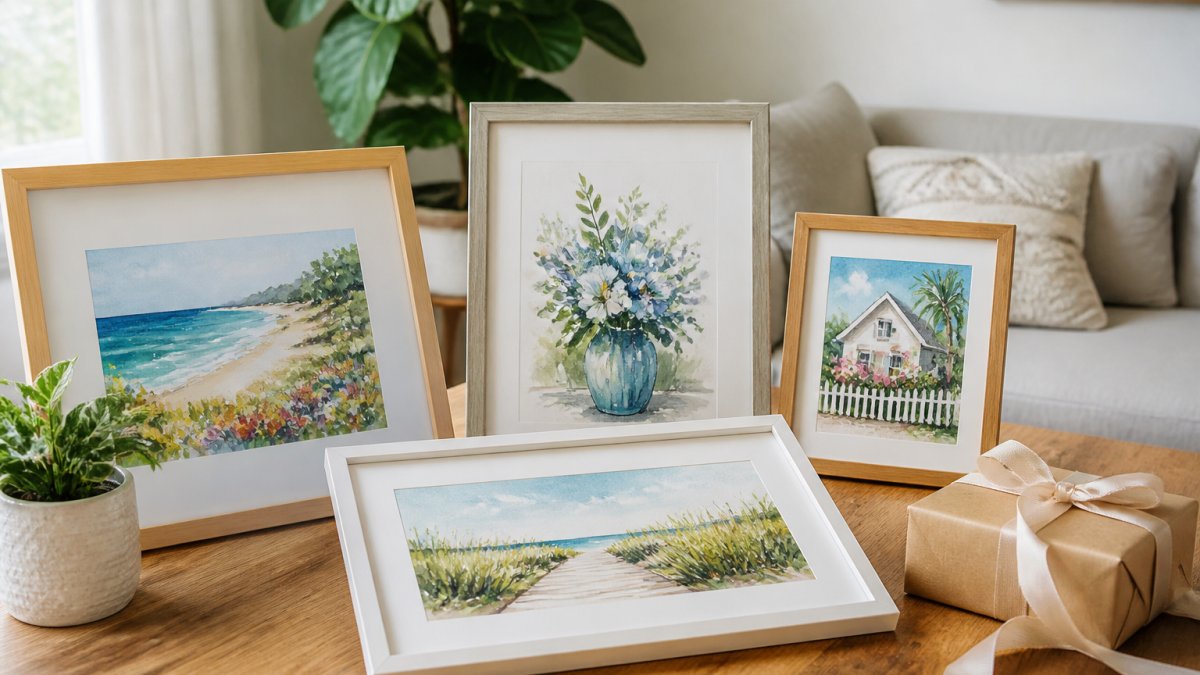
Watercolor paintings and prints are typically lightweight. A standard 16x20 framed watercolor painting weighs 3-5 pounds. Most adhesive strips handle this easily. Canvas pieces may weigh more, so check the frame weight before choosing your method.
Never exceed the weight limit. Overloaded strips fail suddenly. Your artwork falls and gets damaged. The wall may also sustain damage when the strip fails.
Plan Your Layout: Paper Templates and Placement
Planning your layout before hanging saves time and prevents mistakes. A well-planned arrangement looks intentional and balanced.
Using Paper Templates to Test Arrangements
Create paper templates of your frames before hanging anything. Trace each frame on kraft paper or newspaper. Cut out the shapes and tape them to your wall with painter's tape.
Step back and look at the arrangement. Does the spacing feel right? Are the pieces balanced? Move the paper templates around until you're happy with the layout.
This method takes 15-20 minutes but prevents hanging mistakes. You won't have multiple adhesive strip holes from repositioning. You'll hang each piece correctly the first time.
For gallery walls, use this approach:
Trace all frames on paper
Cut out the shapes
Arrange them on the wall with painter's tape
Stand back and evaluate the layout
Make adjustments until satisfied
Mark the wall lightly with a pencil where each frame goes
Remove the paper templates and hang the artwork
Safety Considerations Around Children and Pets
If you have children or pets, placement matters. Hang artwork at least 5-6 feet high if you have small children or climbing toddlers.
Avoid hanging heavy pieces above sleeping areas or seating where people rest.
Keep artwork away from corners where children might run and hit their heads.
For pet owners, consider your animal's size and jumping ability. Cats can reach surprisingly high shelves. Dogs might knock artwork with their tails.
Secure any removable hooks or strips that pets might chew or pull at. Some pets are attracted to adhesive materials. Make sure everything is firmly attached.
Gallery Wall Ideas for Rental Apartments
Gallery walls create visual impact without requiring permanent installation. They're perfect for renters because you can change them whenever you want.
Arranging Multiple Pieces Without Nails
A gallery wall is a collection of frames arranged together on one wall. You can mix frame sizes, colors, and artwork styles. The key is intentional arrangement.
Start with a focal point. This might be your largest piece or a piece with the most color. Arrange other pieces around it. Leave consistent spacing between frames, typically 2-3 inches.
Use adhesive strips or removable hooks to hang each piece. This keeps your wall safe while creating a cohesive look. Watercolor paintings work beautifully in gallery walls because they come in many sizes and color combinations.
When you move, remove all pieces and adhesive strips. Touch up any wall marks with paint if needed. Your wall returns to its original condition.
Creating Visual Balance and Flow
Balance doesn't mean symmetry. You don't need identical pieces on both sides. Instead, distribute visual weight evenly.
Heavy, dark pieces feel weighty. Light, small pieces feel delicate. Mix them to create balance.
Color flow matters too. Don't cluster all warm colors on one side. Spread them throughout the arrangement. This creates movement and interest as the eye travels across the wall.
Vertical arrangements work well for narrow walls. Horizontal arrangements suit wider spaces. Diagonal arrangements create energy and movement. Choose the direction that fits your room.
How to Remove Adhesive Picture Strips Without Damage
Removing adhesive strips properly prevents wall damage. Most damage happens when people pull strips incorrectly.
Step-by-Step Removal Process
Follow these steps for safe removal:
Gently pull one corner of the strip at a 45-degree angle toward the wall
Work slowly. Don't yank or pull straight out
If the strip resists, use a hairdryer on low heat for 10-15 seconds
Heat softens the adhesive and makes removal easier
Continue peeling slowly around all edges
If residue remains, use a plastic scraper or old credit card
Rub gently in circular motions to remove sticky residue
Clean the wall with a dry cloth when finished
The 45-degree angle is crucial. Pulling at this angle keeps adhesive on the strip instead of the wall. Pulling straight out tears the strip and leaves residue behind.
Be patient. Rushing causes wall damage. A removal that takes five minutes is worth it to protect your security deposit.
Fixing Minor Wall Marks Before Move-Out
Minor marks usually fade with time. Paint covers most damage. If you need to fix marks immediately, here's how:
Small adhesive residue comes off with rubbing alcohol. Dampen a cloth and rub gently. Let it dry completely before painting.
Scuffs and light marks disappear with a magic eraser sponge. Dampen the sponge and rub gently. These sponges work on most wall finishes.
For larger marks or holes, use spackle. Fill the hole with spackle using a putty knife. Let it dry, then sand smooth. Paint over the area with matching wall paint.
Most landlords accept minor wall marks as normal wear. Deep holes or large damaged areas may result in security deposit deductions. Focus on major damage only.
Tips for Hanging Art in Rentals: Common Mistakes to Avoid
Learning from others' mistakes saves you money and frustration. Here are the most common errors renters make:
Using the wrong adhesive strips. Many people buy cheap strips that fail within months. Invest in quality strips rated for your wall type and artwork weight. The extra cost prevents damage.
Not testing the layout first. Hanging without planning leads to multiple holes and repositioning. Use paper templates.
Ignoring the lease. Some renters hang first and ask permission later.
Overloading adhesive strips. Exceeding weight limits causes strips to fail.
Pulling strips straight out. This leaves adhesive residue on the wall. Always pull at a 45-degree angle.
Hanging in high-traffic areas. Bumping artwork off walls is common in busy apartments.
Forgetting about humidity. Bathrooms and kitchens have moisture that weakens adhesive.
Not documenting permission. Get written permission from your landlord. Keep emails or letters proving you asked first.
Hanging art in your rental doesn't have to be complicated. At Art By Jd, we offer a curated collection of original watercolor paintings and high-quality reproductions designed to bring vibrant color and joy into your living space.
Frequently Asked Questions
Can you hang pictures in a rental without asking your landlord?
It depends on your lease. Most rental agreements specify what wall modifications are permitted. Always check your lease terms and contact your landlord before hanging art, even damage-free methods. Some landlords prohibit any wall hanging, while others allow removable strips and hooks. Getting written permission protects your security deposit and prevents disputes at move-out. If your landlord denies permission, leaning artwork against furniture or using temporary displays are alternatives.
What's the best way to remove adhesive picture strips without damaging paint?
Peel adhesive strips slowly at a 45-degree angle, pulling down and away from the wall rather than outward. Work slowly to allow the adhesive to release gradually. If residue remains, use a hairdryer on low heat to warm the adhesive, then gently roll the residue off with your fingers or a soft cloth. Avoid scraping with sharp tools, which can damage paint. Test on a small corner first, and always check your wall's paint condition before attempting removal.
How much weight can removable adhesive strips hold for hanging art?
Most removable adhesive strips hold varying weights per strip, depending on the brand and wall surface. Lighter watercolor prints and small frames often work well with these strips. For heavier artwork, use multiple strips or switch to picture rails or leaning displays. Check the product specifications before purchase, and consider your wall type, glossy or textured surfaces may reduce holding strength. Test with a lightweight piece first to ensure the strips work on your specific wall.
Can you hang a gallery wall in a rental apartment without damaging walls?
Yes, gallery walls work well in rentals using damage-free methods. Use removable adhesive strips, picture rails, or lean frames against furniture. Plan your layout on paper first, then arrange pieces using strips or hooks rated for your artwork's combined weight. Mix frame sizes and spacing for visual interest. Ensure each hanging device is secure before moving to the next piece. When removing, take down frames one at a time and carefully peel away adhesive strips to avoid wall damage.
Get Started Today
Comments