How to Care for Watercolor Prints: Complete Guide
Table of Contents
Last Updated: October 18, 2026
Why Proper Care Matters for Watercolor Prints
Proper care for watercolor prints deserves the same attention you'd give to original paintings. They're investments in beauty for your home.
The good news is that protecting watercolor prints doesn't require special expertise. At Art By Jd, we create watercolor art meant to bring joy to your space.
Most damage happens gradually. A print exposed to direct sunlight fades imperceptibly each month.
The best approach is prevention. Frame your prints properly. Store them in stable conditions. Handle them with care. Clean them gently when needed.
Understanding Watercolor Prints vs Original Paintings
Watercolor prints are reproductions of original watercolor artwork, created through modern printing techniques. Original watercolor paintings are one-of-a-kind works painted by hand on paper.
This distinction matters for care because prints and originals respond differently to light, moisture, and handling.
Prints are typically created using archival inks on fine art paper.
Original watercolor paintings are more delicate. The pigment sits on the paper surface rather than being embedded through printing.
For Art By Jd's collection, you receive high-quality reproductions designed to last.
The key difference in care comes down to moisture sensitivity.
How to Frame Watercolor Prints Safely
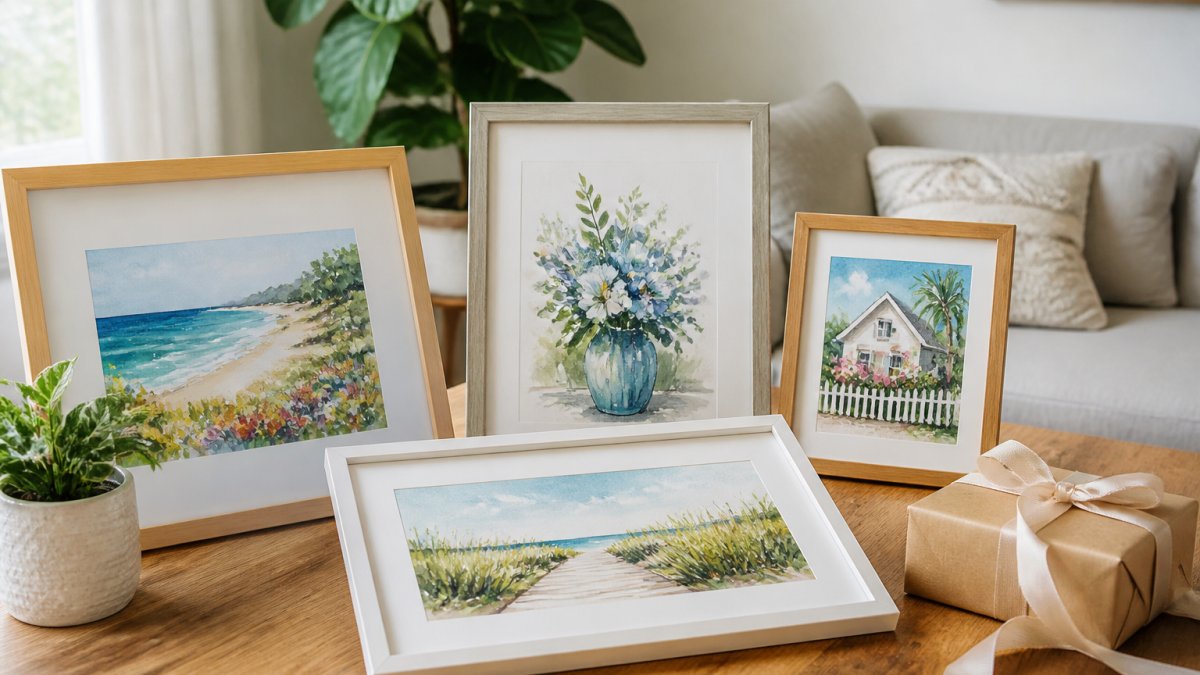
Framing is your first line of defense against damage. A well-framed print is protected from dust, moisture, and physical contact. It's also displayed beautifully, which is the whole point.
Choosing the Right Matting and Glazing
Matting is the cardboard layer between your print and the glass. Glazing is the protective covering, usually glass or acrylic, that sits in front.
Use acid-free mat board. Standard mat board contains chemicals that yellow over time and can damage your print.
For glazing, choose between these options:
Glass: Offers clarity and UV protection. Standard glass blocks some UV light. UV-protective glass blocks up to 99% of harmful rays. It costs more but is worth it for valuable prints.
Acrylic: Lighter than glass and blocks UV light. It's safer if the frame might fall. Acrylic can scratch more easily and may cloud over decades.
UV-protective glazing is the best choice when you care for watercolor prints. It prevents fading while keeping colors vibrant.
Leave space between the print and the glazing. This gap prevents the print from touching the glass, which can cause sticking or moisture buildup.
Installation and Mounting Techniques
Mount your print using archival-quality materials only. Never use regular tape, glue, or staples. These damage the paper and are difficult to remove later.
Best mounting methods:
Hinging: Attach the print at the top using archival tape on the back. The print hangs freely, allowing air to circulate. This is the safest method for valuable pieces.
Mounting corners: Use acid-free corners to hold the print in place without adhesive. The print slides into each corner and is held gently. No damage occurs if you remove it later.
Backing board: Use acid-free board behind the print. It provides support and prevents the print from touching the frame directly.
Never frame a print so tightly that it can't breathe. Air circulation prevents moisture from becoming trapped.
When you frame a print, have it done by a professional framer if possible. They know which materials are archival and which techniques preserve artwork.

How to Protect Art Prints from Sunlight
Sunlight is the enemy of watercolor prints. UV rays fade pigments. Over months and years, bright colors become dull. The damage is permanent.
Direct sunlight causes the worst fading. A print in a south-facing window can lose noticeable color within a year.
Protection strategies:
Placement: Hang prints away from windows. If you must display near a window, use UV-protective glass or acrylic in the frame.
Curtains and blinds: Use sheer curtains or adjustable blinds to filter light. You can control brightness without blocking the room entirely.
Lighting: Use artificial lighting instead. Picture lights mounted above frames provide illumination without UV damage. LED bulbs emit minimal heat and UV radiation.
Rotation: If you have multiple prints, rotate their display locations every few months. This distributes sun exposure evenly.
The amount of light matters less than the type. Bright interior light away from windows is safer than dim light from a sunny window.
Watercolor prints in bedrooms or hallways, areas with less direct sun, naturally last longer than those in bright living rooms or kitchens.
How to Store Art Prints Long-Term
Whether you're storing prints temporarily or keeping backups, proper storage prevents damage. The wrong conditions lead to fading, spotting, mold, and paper deterioration.
Storage Materials and Packaging
Use acid-free boxes and tissue paper. Regular cardboard and newspaper contain chemicals that damage prints over time. Acid-free supplies cost more but preserve artwork indefinitely.
Proper storage setup:
Store prints flat, not rolled. Rolling creases the paper and stresses the fibers.
Separate prints with acid-free tissue. Don't stack prints directly on each other.
Use acid-free folders or sleeves for individual prints. They protect against dust and physical contact.
Label boxes clearly so you know what's inside without opening them.
Never use plastic bags or plastic wrap. Plastic traps moisture and can cause condensation damage. Paper and cardboard allow air circulation.
Store prints in their frames if possible. Frames provide structure and protection. Unframed prints are more vulnerable to bending and creasing.
Climate Control for Preservation
Temperature and humidity are critical for long-term storage. Fluctuations cause paper to expand and contract, leading to warping and buckling.
Ideal storage conditions:
Temperature: 60-70°F (15-21°C)
Humidity: 30-50% relative humidity
Consistency: Minimize temperature and humidity swings
Basements and attics are poor storage locations. Basements get damp. Attics experience extreme temperature swings. Closets in climate-controlled rooms are better.
Use a dehumidifier if your storage area is naturally humid. Monitor humidity with an inexpensive meter. If levels stay above 60%, moisture damage becomes likely.
Avoid storing prints near:
Radiators or heating vents (too hot and dry)
Exterior walls in cold climates (condensation risk)
Kitchens and bathrooms (steam and moisture)
Basements with water infiltration history (mold risk)
A cool, dry closet in a bedroom or interior hallway is often ideal. The space stays stable year-round without extreme conditions.
How to Clean a Watercolor Print
Over time, dust settles on frames and glass. Fingerprints appear. You might notice spots or marks on the surface. Gentle cleaning restores appearance without causing damage.
Gentle Dusting and Surface Cleaning
Start with the frame and glass. Use a soft microfiber cloth, the kind used for eyeglasses or electronics.
Dust the glass first. Wipe gently in circular motions. Don't press hard.
For the frame, use the same soft cloth. Avoid getting moisture on wood frames, as it causes swelling and warping.
Never spray cleaner directly on the frame or glass. Liquid can seep into the frame and damage the print.
For unframed prints, be even more cautious. Dust them with a soft brush designed for art, moving in one direction. Never rub.
Removing Spots and Marks Safely
Small spots or marks sometimes appear on prints. Before attempting removal, determine what caused them. Different problems require different solutions.
Common issues and safe approaches:
Dust spots: Use a soft brush or compressed air. Hold the can upright and use short bursts. Don't let the nozzle touch the print.
Fingerprints on glass: Breathe on the glass and wipe gently with a microfiber cloth. For stubborn prints, use glass cleaner on the cloth, never spray directly.
Marks on the print surface: Leave them alone if possible. Attempting removal often causes more damage. If the mark is truly problematic, consult a professional conservator.
Surface dust on an unframed print: Use a soft brush or art eraser designed for paper. Erase gently in one direction, not back-and-forth.
Never use water on the print itself unless absolutely necessary and you're prepared for potential damage. Never use solvents, alcohol, or harsh chemicals. These damage pigments and paper.
If a print develops mold, water stains, or significant marks, professional restoration is worth considering. Attempting DIY removal risks making things worse.
Responding to Water Damage and Humidity Issues
Accidents happen. A print gets wet. Humidity spikes in your home. You notice discoloration or soft spots in the paper.
If a print gets wet, handle it carefully. Don't panic or rush. The first few hours determine the outcome.
Immediate response to water damage:
Stop the water source if possible. Close windows. Turn off humidifiers.
Remove the print from its frame if water is still present. Glass and backing trap moisture.
Place the print on a clean, dry surface. Don't fold it or stack other items on top.
Allow it to air dry naturally. Don't use heat. Don't place it in direct sunlight. A cool, well-ventilated room is ideal.
If the print is still wet after a few hours, place it between clean, acid-free paper towels. Change the towels as they absorb moisture.
Never attempt to dry a print with a hair dryer or heat source.
If mold appears, visible dark spots or a musty smell, the situation is serious. Mold spreads and causes permanent damage. Professional restoration is necessary.
For humidity issues, use a dehumidifier if relative humidity stays above 55%. Monitor conditions with a humidity meter.
Daily Handling and Display Tips
How you interact with your prints daily affects their longevity. Small habits compound over time.
Best practices for handling:
Wash your hands before touching unframed prints. Oils from skin transfer to paper and attract dust.
Hold prints by the edges, never the center. Pressure on the surface can mark or damage the paper.
Avoid eating or drinking near artwork. Spills cause permanent damage.
Keep pets and children away from unframed or easily accessible prints.
When moving prints, support them flat. Never carry them vertically like a book. Never bend or fold them, even slightly.
For framed prints, hang them securely. Use appropriate wall anchors and hardware rated for the frame's weight.
Rotate the location of prints occasionally if they're in bright areas. This distributes light exposure evenly and prevents uneven fading.
Review your storage and display setup annually. Check for signs of damage, fading, or moisture. Adjust conditions if needed.
Care Task | Frequency | Best Practice |
Dust frames and glass | Monthly | Soft microfiber cloth, no pressure |
Check humidity levels | Monthly | Keep between 30-50% relative humidity |
Inspect for damage | Quarterly | Look for fading, spots, or warping |
Rotate display locations | Every 6 months | Distributes light exposure evenly |
Professional cleaning | As needed | Consult conservator for serious issues |
Frequently Asked Questions
How do you preserve watercolor prints to prevent fading?
Preserve watercolor prints by displaying them away from direct sunlight and UV exposure, which causes pigment fading over time. Use UV-protective glazing when framing, maintain stable humidity between 30-50%, and keep temperature consistent around 65-75°F. Store prints flat in acid-free folders when not on display, and avoid damp environments. These conditions protect the paper, ink, and pigment from deterioration and color shift.
Can you clean a watercolor print without damaging it?
Yes, you can clean watercolor prints safely using gentle techniques. For dust removal, use a soft microfiber cloth or art gum eraser with light pressure. For spots or marks, test any cleaning method on an inconspicuous area first. Never use water or harsh chemicals directly on the print surface. If the print is valuable or heavily soiled, consult a professional conservator. Most surface cleaning requires only a dry cloth and patience.
What's the best way to store watercolor prints long-term?
Store watercolor prints flat in archival-quality acid-free folders or boxes in a cool, dry location with stable humidity. Keep temperature between 60-70°F and humidity at 30-50% to prevent mold and warping. Avoid basements, attics, and damp areas. Wrap prints individually in acid-free tissue, never use plastic, and store in a dark space away from light. Check stored prints periodically for signs of damage or moisture.
How should you frame a watercolor print to protect it?
Frame watercolor prints using archival-quality materials: acid-free matting, UV-protective glazing, and a backing board. Mount the print using acid-free hinges or corners rather than adhesive. Leave space between the print and glazing to prevent contact. Use a quality frame with sealed backing to keep dust and moisture out. If moving frequently, ensure the frame is sturdy and the print is securely fastened to prevent shifting or damage during transport.
Preserving watercolor prints is straightforward when you understand the fundamentals. Keep them away from direct sunlight. Maintain stable humidity and temperature. Frame them with archival materials. Handle them gently. At Art By Jd, we create watercolor art designed to last, your thoughtful care ensures it does. Start with proper framing and storage today, and your prints will brighten your space for years to come.
Get Started Today
Comments